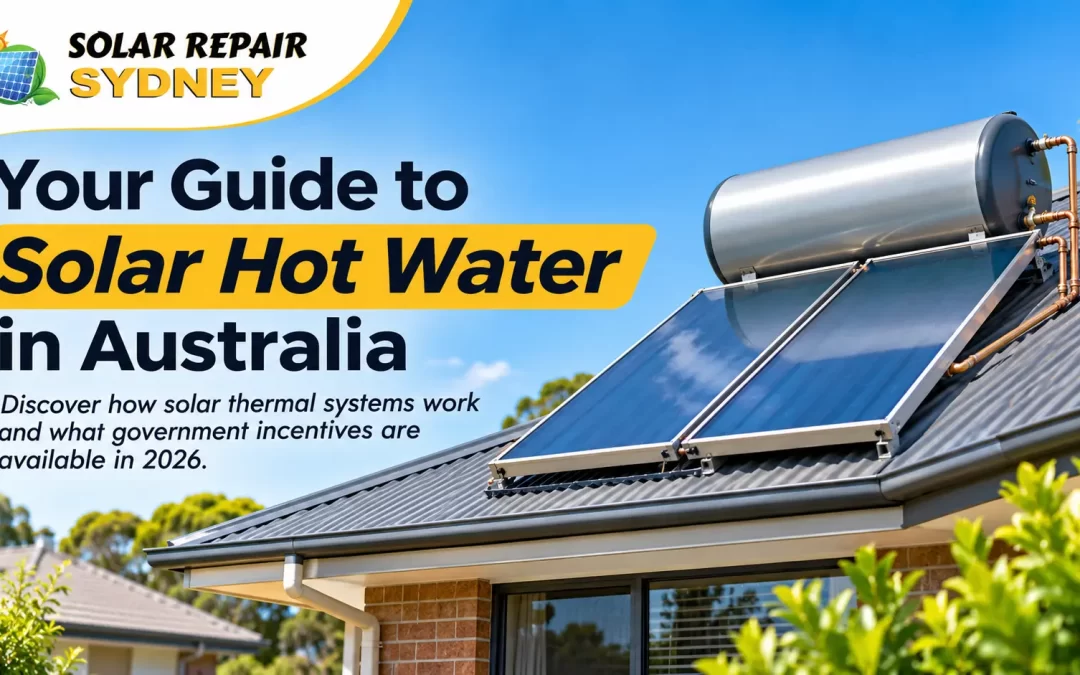
Australian solar hot water systems use two types of collectors: flat-plate and evacuated-tube collectors. They also come in different configurations, including roof-mounted thermosiphon systems and split systems with separate storage tanks.
Installation requirements can also differ between locations. For example, a solar hot water system in Caboolture may need to account for local roof conditions, available sunlight and household water demand. These factors can influence the choice of collector, storage tank location and overall system configuration.
How Solar Hot Water Systems Heat and Store Water
Solar hot water systems heat water by collecting thermal energy from sunlight and transferring that heat into an insulated storage tank. Household water either circulates directly through the solar collectors or receives heat from a separate fluid through a heat exchanger.
As the water heats up, it rises towards the upper section of the storage tank, while cooler water remains near the bottom. This natural temperature layering, known as thermal stratification, helps keep hotter water available for household use. In thermosiphon systems, temperature differences also drive water circulation between the collectors and the tank. Split systems use a circulation pump to move water or heat-transfer fluid through the collectors.
The insulated tank slows heat loss, allowing households to use stored hot water later in the day or overnight. When someone turns on a hot water tap, heated water leaves the upper part of the tank while fresh cold water enters near the bottom. If the stored water cannot meet the required temperature, an electric or gas booster provides additional heating.
Types of Solar Hot Water Systems Available in Australia
Australian solar hot water systems use two types of collectors: flat-plate and evacuated-tube collectors. They also come in different configurations, including roof-mounted thermosiphon systems and split systems with separate storage tanks. These options differ in how they absorb heat, circulate water and accommodate different installation conditions.
| Flat-Plate Solar Collectors | Evacuated-Tube Solar Collectors | Roof-Mounted Thermosiphon Systems | Split Solar Hot Water Systems |
| Uses a dark metal plate beneath a glass cover to absorb sunlight and transfer heat to water in a storage tank. | Uses vacuum-insulated glass tubes to absorb solar heat while reducing heat loss to the surrounding air. | Uses roof-mounted collectors and a storage tank positioned above them. Heated water rises naturally into the tank without requiring a circulation pump. | Use roof-mounted collectors and a separate storage tank, usually at ground level. A temperature-controlled pump circulates water or heat-transfer fluid between them. |
What Are the Benefits of Solar Hot Water Systems?
✓ Lower water heating bills. Solar collectors provide much of the heat needed for household hot water.
✓ Reduced greenhouse gas emissions. Using solar thermal energy reduces the amount of electricity or gas needed to heat water.
✓ Hot water available after sunset. An insulated storage tank retains heat collected during the day.
✓ Flexible installation options. Homeowners can choose roof-mounted tanks or split systems with ground-level storage.
✓ Potential government incentives. Eligible installations may qualify for Small-scale Technology Certificates (STCs).
A Sydney household replacing a conventional electric water heater with a solar hot water system could save around $400 annually on energy bills. At that rate, savings could reach $2,000 over five years or $4,000 over ten years, assuming energy prices and household usage remain unchanged. These figures represent energy bill savings only and exclude installation, maintenance and repair costs.
Solar Hot Water vs Heat Pump Hot Water: What’s the Difference?
Heat pump water heaters achieve a coefficient of performance (COP) of 3–5, meaning they deliver three to five units of heat for every unit of electricity consumed. Solar hot water systems rely primarily on sunlight, with performance influenced by solar exposure.
Heat pumps can also use surplus electricity from existing rooftop solar panels. Many models have timers or smart controls that schedule water heating during peak solar generation. Solar hot water systems require separate thermal collectors, although their electric boosters can also use solar-generated electricity.
Solar hot water systems have distinct advantages over heat pumps:
- Solar collectors heat water without running an electric compressor.
- On sunny days, solar energy can meet much of the household’s water heating needs.
- Thermosiphon systems circulate water naturally without an electric pump or compressor.
However, solar hot water systems have some operating limitations worth considering. A faulty circulation pump or temperature sensor may go unnoticed because the electric or gas booster continues supplying hot water, potentially increasing energy consumption.
Prolonged summer sunshine can also cause overheating, particularly when hot water demand is low. In colder Australian regions, inadequate frost protection can allow water to freeze and damage collector pipes. Poorly timed booster operation and heat loss through exposed or poorly insulated pipes can further reduce energy savings.
What Solar Hot Water Rebates Can You Claim in 2026?
You may qualify for federal incentives under Australia’s Small-scale Renewable Energy Scheme (SRES) when installing an eligible solar hot water system. You can assign your Small-scale Technology Certificates (STCs) to a registered agent in exchange for an upfront discount. Check that your model appears on the Clean Energy Regulator’s eligible register. Systems with a capacity over 700 litres require additional documentation.
You may also qualify for state incentives. In NSW, eligible replacements can attract discounts of up to $900 for electric-boosted solar systems or $550 for gas-boosted systems. Victoria offers rebates covering 50% of the eligible product purchase price after other discounts, capped at $1,000 or $1,400 for approved locally made products. Your eligibility depends on the product, property and program requirements.
How Do You Maintain a Solar Hot Water System?
Regular solar hot water maintenance involves checking the following components and warning signs:
- Check for unusual circulation pump noises.
- Inspect rooftop collectors for water leaks.
- Monitor sudden changes in hot water temperature.
- Check whether the solar collectors are heating water without relying entirely on the booster.
- Inspect frost protection valves for leaks or damage.
- Check temperature sensors and controller fault codes.
- Inspect exposed solar pipe insulation for cracks or deterioration.
- Check for airlocks or poor circulation in the solar heating circuit.
- Look for corrosion around collector connections and storage tank fittings.
- Monitor unexpected increases in electricity or gas consumption.
Have a licensed professional inspect and repair faulty components, and follow the manufacturer’s recommended servicing intervals.
When Is Solar Hot Water Worth Installing?
Solar hot water is worth considering if your roof receives plenty of sunlight and you want to reduce long-term energy costs. However, the actual savings depend on your hot water consumption, system size and installation conditions. Your household may benefit more from solar hot water when these factors apply:
- Ageing hot water system that frequently breaks down or requires expensive repairs.
- Having a larger household that uses substantial amounts of hot water every day.
- Having a north-facing roof with minimal shading and enough space for solar collectors.
- Qualifying for government rebates or incentives that reduce the upfront installation cost.
- Planning to stay in your home long enough for energy bill savings to offset the initial investment.
Solar hot water becomes less cost-effective when limited sunlight increases your reliance on electric or gas boosters. If your home has these conditions, a heat pump system may offer lower running costs and better long-term value.
Conclusion
If you’ve been considering solar hot water for your home, this could be a great opportunity to explore your options! Australian government programs continue to support eligible hot water upgrades. Find out what’s available in your state and take the first step towards using more solar energy at home.