You’re here to understand how to connect solar panels to hot water tank setups – which means you probably have a solar system already, as well as a hot water system that’s still costing you money. So first up, you’re absolutely right to be wondering why those two things can’t work together.
Well, here’s the good news – they absolutely CAN work together. The slightly more nuanced answer is that there are a few different ways to make it happen – and the right one depends on:
- What you already have
- What you’re willing to spend
- How much hot water your household uses.
So let’s not beat around the bush, and instead dive right into the 3 approaches that absolutely could work for you.
Why hot water is worth targeting
But before we get into the systems, it’s worth understanding precisely why hot water is such a good candidate for solar energy in the first place.
It’s because hot water accounts for around 25-30% of a typical household’s electricity bill – and that’s an awful lot, when you think of all the different things you use power for.
So if you have solar panels generating power during the day and your hot water system is running on grid electricity at night, you’re simply paying for something your roof could be doing for free. Fixing that mismatch is one of the highest-value things a solar household can do.
Here’s how:
The 3 ways to use solar energy for hot water
The right option depends on what you already have installed – so read through all three before deciding which direction makes sense.
1. Solar thermal hot water
Let’s start with the original solar hot water system, and it works differently from everything else on this list – because it doesn’t use your solar panels at all.
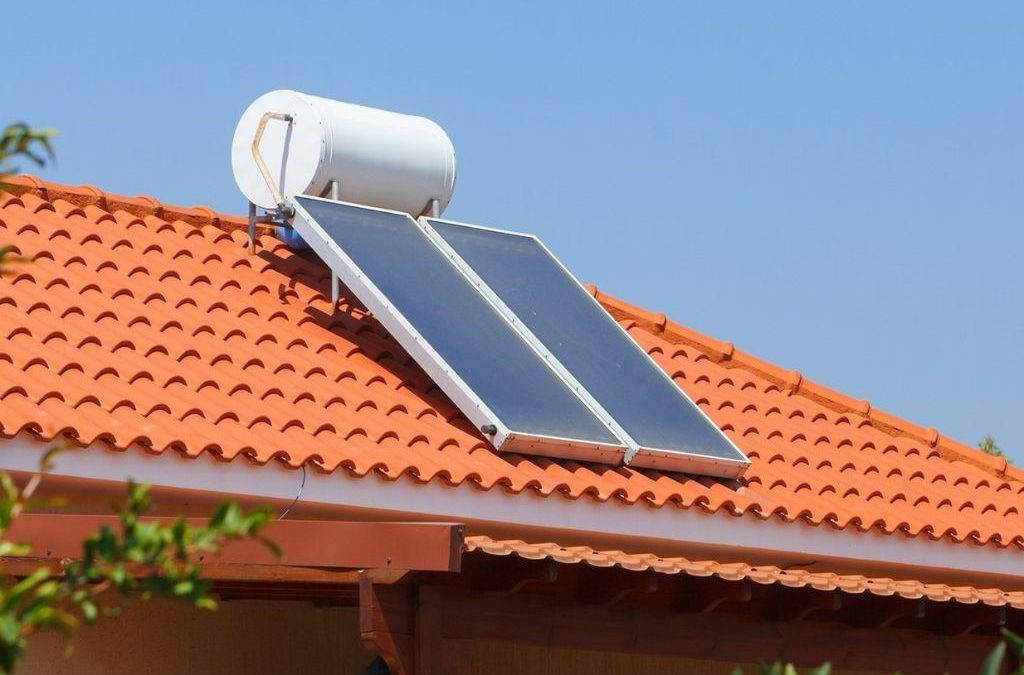
Solar thermal systems use roof-mounted collectors (not PV panels) to capture heat from the sun directly and transfer it to water in a storage tank.
- The sun heats the water through the collector
- The water circulates into the tank
- Your household draws from that stored hot water throughout the day and evening.
The advantages are efficiency and simplicity – there’s no conversion from sunlight to electricity and back to heat, which means less energy lost in the process.
There are some disadvantages to understand, too:
- It’s a separate roof system from your solar panels
- It requires specific installation
- On overcast days it typically has a gas or electric booster to cover the shortfall.
If you’re building a new home or replacing a hot water system on a property without existing solar PV panels, solar thermal is well worth serious consideration. But if you already have PV panels on the roof, one of the next two options is likely more practical.
2. Heat pump hot water
A heat pump doesn’t use solar energy directly either – but here’s the fantastic news. Pairing one with a solar system is one of the smartest combinations available to Australian households right now.
A heat pump works like a reverse air conditioner – it extracts heat from the surrounding air and uses it to heat water, which makes it two to three times more efficient than a standard electric element. It runs on electricity – but a fraction of what a conventional electric system uses.
The solar connection is this: if you set your heat pump to run during the middle of the day, it draws from your solar generation rather than the grid. You’re using electricity your panels are producing – electricity you’d otherwise export for around 5 cents per kilowatt-hour – to heat water instead of buying grid power at 30 cents or more. The savings stack up fast.
Heat pumps are also eligible for the federal Small-Scale Technology Certificate rebate – which reduces the upfront cost significantly. For households with solar panels already installed, a heat pump timed to run during generation hours is often the most cost-effective hot water solution available.
3. Solar-connected electric hot water
But how to connect solar panels to a hot water tank … literally? We’re about to explain it – and for many households, this one is the simplest and most affordable path of all.
A standard electric hot water storage tank can be connected to your solar system so that it draws power directly from your panels during the day.
This is done in a couple of ways:
A Timer: The simplest method is a timer – setting your existing hot water system to heat during peak solar generation hours (typically 10am to 3pm) rather than overnight. If your system is set to heat at night on an off-peak tariff, switching the timer to run during the day means you’re using your own solar power instead of buying it. This costs almost nothing to implement and can be done by an electrician in a short visit.
A Diverter: A more sophisticated option is a solar diverter – a device that monitors your solar export and automatically redirects excess power to your hot water system before it goes to the grid. Rather than earning 5 cents per kilowatt-hour for exported power, you’re using it to heat water that would otherwise cost you 30 cents per unit. A diverter typically costs $500-$1,000 installed and pays itself off quickly in households with consistent solar surplus.
Both approaches work with your existing electric hot water tank – with no new hot water system required in many cases. If your tank is ageing or undersized, it may make sense to replace it at the same time, but the solar connection itself doesn’t require new hardware beyond the diverter or a timer adjustment.
Which one is right for you?
Now we get to the nitty-gritty – and here’s a simple way to think about it:
Do you already have solar PV panels and an electric hot water system?
Start with a timer adjustment or solar diverter. It’s the lowest cost answer to how to connect solar panels to a hot water tank – and delivers immediate savings.
Do you have solar and want to upgrade your hot water system?
A heat pump timed to run during solar hours is the best long-term option. Higher upfront cost, but lowest running cost.
No solar PV panels and you’re replacing a hot water system?
Solar thermal is worth considering alongside a heat pump. Get quotes for both and compare over a ten-year horizon.
On LPG gas?
The economics strongly favour switching to electric – either heat pump or solar-connected tank. LPG running costs make the switch pay off quickly.
Let Solar Repair Sydney sort it
Solar Repair Sydney specialises in getting the most out of your existing solar system – and if your hot water setup isn’t working with your panels the way it should be, that’s exactly the kind of problem we diagnose and solve.
Get in touch for a no-pressure conversation about your options.