
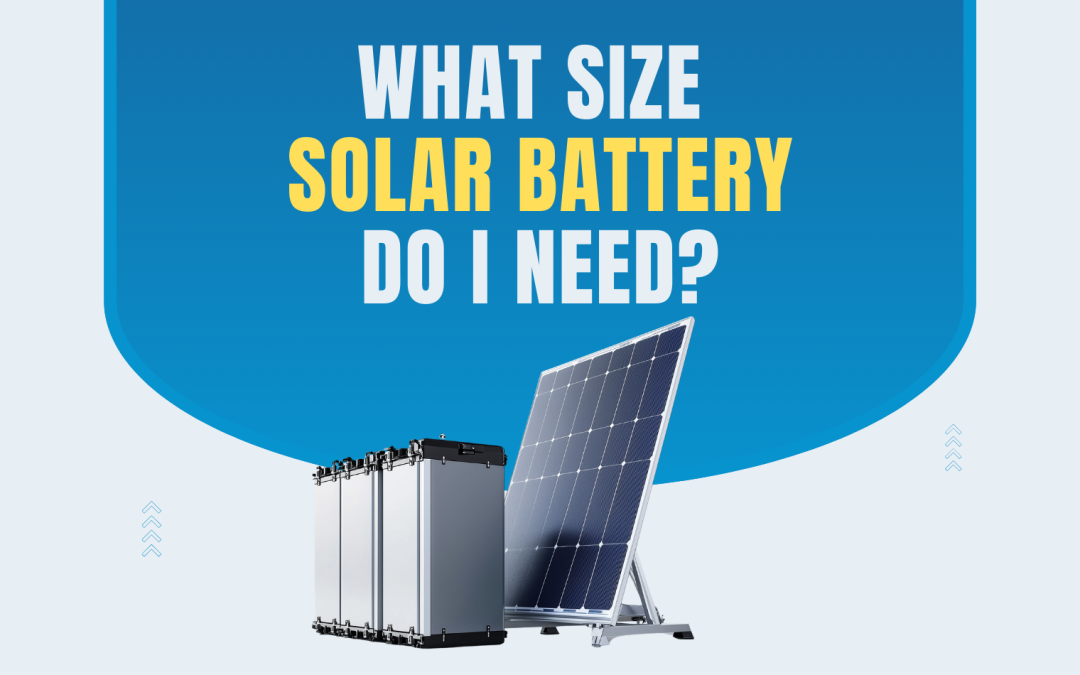
Choosing a solar battery represents the smartest move you can make toward complete energy independence and slashing those stubborn electricity bills. Picking the right size requires a balance between your daily energy consumption and your long-term savings goals. A properly sized battery stores excess solar energy during the day so your home can continue running on solar power after sunset.
Start by identifying how you plan to use your battery:
- Check your home’s electricity use during evening hours.
- Decide if the battery will support overnight energy use.
- Determine if you want backup power during outages.
Once you understand your needs, you can select a capacity that uses your solar energy efficiently.
Calculate Your Home’s Energy Use Between Dusk and Dawn
Your solar panels stop generating power around 5:00 PM and 6:00 PM, yet this is exactly when your household activity spikes. You turn on the oven, the kids start their homework, and the air conditioning works overtime to cool the house. Use your evening electricity consumption to estimate the right battery size.
| Night-Time Energy Use (kWh) | Battery Capacity |
|---|---|
| 5 kWh | 6–7 kWh battery |
| 8 kWh | 9–10 kWh battery |
| 10 kWh | 11–12 kWh battery |
| 13 kWh | 14–15 kWh battery |
| 16 kWh | 17–18 kWh battery |
Many homeowners overcomplicate this calculation by trying to track every appliance. Instead, monitor your electricity usage through your energy app for about a week. Choosing a battery with a little more capacity than your average night-time use provides a buffer for higher electricity demand.
Choose Between Self-Consumption and Backup Power
Are you trying to avoid high time-of-use tariffs, or do you want a system that keeps your home powered during a grid failure? There is a massive difference in hardware requirements and solar battery costs for these two objectives.
- For self-consumption, you only need enough storage for evening energy use.
- If your goal is backup power, you must install a larger battery system.
Solar Repair Sydney team recommends separating your home’s wiring so the battery only feeds the kitchen and living room during an outage. This strategy prevents you from draining your entire storage reserve in two hours.
Large-scale backup systems require stacking two or three units together to handle the massive surge of energy required to start heavy motors and compressors.
Check the Usable Energy in Your Solar Battery
You might buy a battery labeled as 10kWh, but you can only use a portion of that energy. This is known as Depth of Discharge. Older lead-acid batteries allow about 50% usable energy, while modern lithium-ion batteries allow 90% to 100% of the capacity.
For example, a battery with 10kWh total capacity but only 8kWh usable capacity means you lose about 20% of the stored energy for daily use.
When comparing solar batteries, focus on these performance factors:
- Check usable capacity, not just the total capacity.
- Lithium-ion batteries provide 90%–100% usable energy.
- Round-trip efficiency shows how much energy is lost in storage.
- High-quality systems maintain about 90% efficiency.
- Low-efficiency batteries can lose 15%–20% of stored solar power.
Over a ten-year period, these small losses add up to thousands of dollars in missed savings. At Solar Repair Sydney, we prioritize battery systems that minimize energy loss and improve long-term value.
Solar Battery That Supports Future Upgrades
Adding a second or third unit later is much easier if you choose a modular system from the start. Some brands allow you to “daisy-chain” extra modules as your family grows. This approach prevents you from being stuck with an undersized system that no longer meets your demands.
At Solar Repair Sydney, our team recommends inverter systems that are battery-ready even if they only start with a small storage module initially. Most premium batteries are rated for 6,000 to 10,000 cycles, which equals roughly 10 to 15 years of daily use.
Installing a slightly larger battery gives your home extra capacity to handle future energy needs.
Location and Temperature Affects Battery Performance
Where you install the unit affects its performance and effective size. Sydney’s heat can be brutal on electronics. The installation environment plays a major role in battery efficiency and lifespan.
Use the guide below to compare common placement issues and recommended solutions.
| Battery Location | Suggested Placement |
|---|---|
| Direct sunlight hitting the battery | Install the battery in a shaded location to reduce overheating. |
| Poor ventilation around the unit | Choose a well-ventilated space such as a garage or shaded exterior wall. |
| High outdoor temperatures | Install the unit in a cooler environment to preserve stored energy. |
| Cold night temperatures | Place the battery in a temperature-stable location. |
| Installation near walls or outdoor zones | Check council regulations and fire safety guidelines before installation. |
Proper placement increases the safety of your home and the longevity of the hardware.
Need Help Choosing Your Solar Battery?
Adding a solar battery system allows homeowners to store excess solar energy for later use. At Solar Repair Sydney, we install solar battery storage across Sydney for both new and existing solar systems, including solutions like the Tesla Powerwall. Our team works with homeowners to understand their electricity usage and recommend a battery size that fits their household needs and solar production.
Our installation process at Solar Repair Sydney includes:
- Reviewing your household energy usage and providing a system quote.
- Selecting the right battery and designing the system layout.
- Installing the solar battery system through our certified solar electricians.
- Testing the system and completing final commissioning checks.
- Providing customer training and ongoing support.
Choosing the right battery size and installing it correctly helps your solar system deliver more usable energy for your home.
Sizing Your Solar Battery for Long-Term Savings
Calculating the perfect dimensions for your storage setup makes every kilowatt-hour harvested by your panels work for you instead of being sent back to the grid for pennies. Aligning your battery capacity with your lifestyle lets you run your home as a self-sustaining powerhouse.
One final check of your quarterly bill will reveal the exact number of units you need to purchase to achieve total freedom from the energy retailers. Selecting the right size today means you won’t have to worry about rising electricity prices for the next decade. At Solar Repair Sydney, our team helps you navigate these technical choices to find the setup that matches your budget and your house.
Related posts:
 Best Solar Battery in Australia: 2025 Buyers Guide
 Federal Government Solar Battery Rebate – Cheaper Home Batteries Program
 Federal Solar Battery Rebate and NSW VPP Incentive 2026
 Australia’s Top 7 Solar Battery Brands Of 2026
 Fox ESS Battery Review 2026
 Solar Battery Cost in Sydney: 2025 Price Breakdown