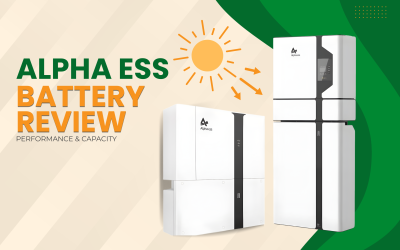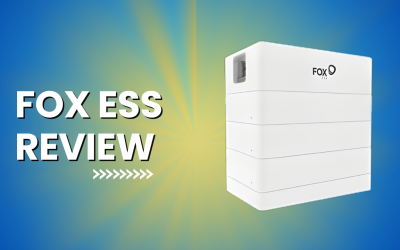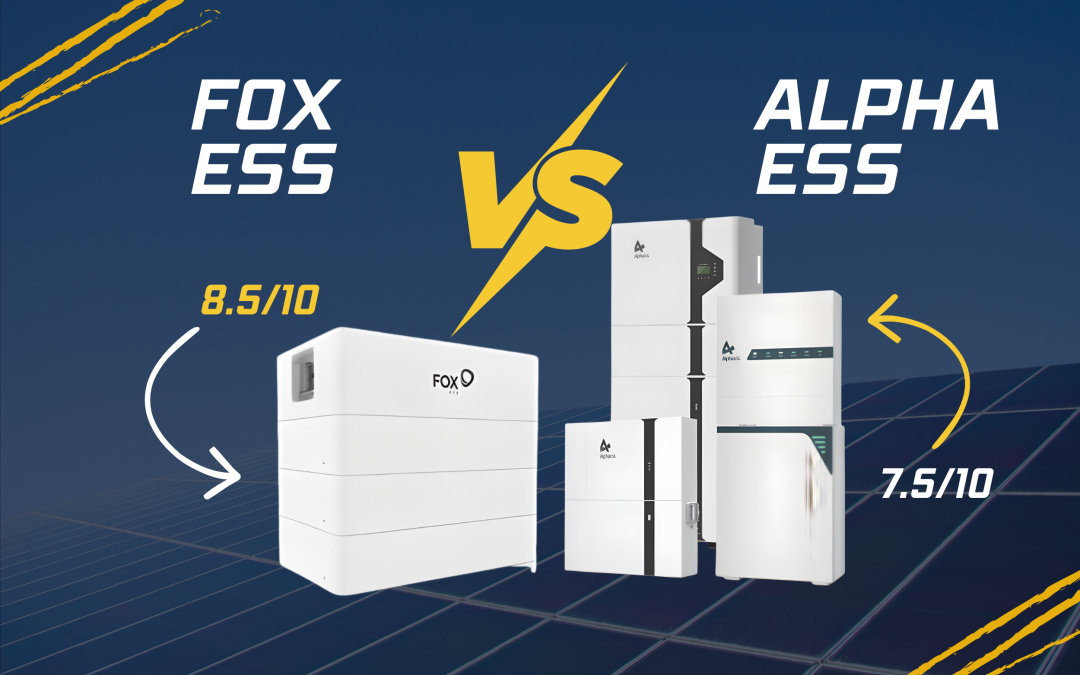
They’re both solar batteries. They both end in “ESS”. They’re both Chinese-made, both popular in Australia, and both use LFP chemistry. So … Alpha ESS vs Fox ESS. What’s the difference?
Quite a bit, as it turns out.
First, let’s clear up what that common “ESS” is all about. It stands for Energy Storage System – a broad term that both brands have adopted as part of their name. But beyond the shared acronym, AlphaESS and FoxESS have developed distinct products with:
- Different strengths
- Different target customers
- Genuinely different performance profiles across the metrics that matter most for Sydney homeowners.
Here at Solar Repair Sydney, we’re often asked about these two popular products – and so we decided to put together an honest head-to-head. There’s no brand loyalty here, no sponsored content … just a straight comparison of how these two systems stack up against each other across the key performance categories, with a score for each, and a final verdict on who each one actually suits at the end of the day.
A quick introduction to each brand
AlphaESS has been in the Australian market since 2014 – longer than most of its Chinese competitors. Their SMILE series is their flagship residential product: a modular, hybrid-inverter-integrated system with strong smart energy management and a proven local track record. If longevity in the Australian market means anything, AlphaESS has earned its credibility here.
FoxESS arrived later but has moved fast. Operating under the Isola Group, FoxESS has built a strong following in Australia, the UK, and Europe with their ECS (Energy Cube System) and EP11 battery series – stackable, modular, and designed to integrate tightly with their own hybrid inverter ecosystem. Sleek design, competitive pricing, and strong backup capability have made them one of the fastest-growing battery brands in the country.
And now, without further ado … the head-to-head.
1. Capacity & scalability
AlphaESS: The SMILE series starts at around 5.7 kWh and scales to 13.3 kWh in a standard single-unit configuration. Modular expansion is possible but less intuitive than FoxESS, particularly for three-phase setups.
FoxESS: The ECS series offers 5.12 kWh per module with up to four modules stackable – reaching 20.48 kWh in a single tower. The EP11 goes further, with 9.3 kWh usable per unit and stacking to 41.6 kWh. For households planning to grow their storage over time – or add EV charging – FoxESS’s modular architecture is more flexible.
THE WINNER?:
It’s FoxESS – the scalability ceiling is higher and the expansion path is more intuitive.
AlphaESS: 7/10
FoxESS: 9/10
2. Efficiency & performance
AlphaESS’s round-trip efficiency sits at approximately 95-96%, with a 95% depth of discharge. That’s solid, consistent performance in Australian conditions, including Queensland-level heat.
For round-trip efficiency, FoxESS comes in at typically 95-98%, with a 98% depth of discharge – meaning more of the battery’s total capacity is actually usable day to day.
In practical terms, the difference is small but real, particularly for households maximising every kWh.
THE WINNER?:
It’s FoxESS again – but only marginally, both on paper and in practice.
AlphaESS: 8/10
FoxESS: 9/10
3. Battery chemistry & safety
Both systems use Lithium Iron Phosphate (LFP) chemistry – the current gold standard for residential batteries. LFP is thermally stable, resistant to thermal runaway, and well-suited to Sydney’s climate, where summer temperatures push systems hard. Both carry IP65 ratings for indoor and outdoor installation.
THE WINNER?:
No meaningful difference here – this one’s a draw.
AlphaESS: 9/10
FoxESS: 9/10
4. Backup capability
AlphaESS offers backup capability with compatible hybrid inverter setups, covering essential loads during grid outages. Reliable but not the most seamless switching experience in its class.
As for FoxESS, backup capability is one of the genuine standout features. When paired with a compatible FoxESS hybrid inverter, the system switches to battery backup automatically during a grid outage – fast, seamless, and configurable for whole-home or essential-circuits-only coverage. For Sydney households in areas with grid reliability concerns, this is a meaningful difference.
THE WINNER?:
FoxESS yet again – for faster switching and more configurable backup.
AlphaESS: 7/10
FoxESS: 9/10
5. System integration & compatibility
AlphaESS is designed to work best within the AlphaESS ecosystem – a hybrid inverter and battery paired together. The integration is clean and well-developed, with over a decade of refinement in the Australian market. But less flexible for homes with existing non-AlphaESS inverters.
FoxESS is similarly ecosystem-focused – FoxESS batteries pair tightly with FoxESS hybrid inverters (H1, H3, AIO, ECS series). The integration is arguably tighter and more feature-rich than AlphaESS at this point, particularly for monitoring and automation. Also less flexible outside its own ecosystem.
THE WINNER?:
A slight edge to FoxESS for the depth of inverter-battery integration, but both suit new installations better than retrofits.
AlphaESS: 8/10
FoxESS: 8.5/10
6. Monitoring & user experience
AlphaESS’ AlphaCloud monitoring platform and companion app provide real-time generation, storage, and consumption data. It’s functional and reliable, with a reasonably clean interface. Not the most visually polished app on the market but certainly does the job well.
As for FoxESS, the app has been significantly upgraded in recent versions and now offers real-time monitoring, intelligent scheduling for time-of-use tariff optimisation, and blackout protection management. User feedback in Australia has been broadly positive about the app experience – it’s intuitive and genuinely useful day to day.
THE WINNER?:
FoxESS – for a more feature-rich app with better scheduling functionality.
AlphaESS: 7.5/10
FoxESS: 8.5/10
7. Warranty & long-term support
AlphaESS has a 10-year product warranty with capacity retention guarantee. The established Australian presence since 2014 means genuine local support infrastructure – a meaningful advantage for a product you’ll rely on for 10-15 years.
FoxESS: 10-year product warranty with a growing Australian installer network and local support that is improving quickly. But AlphaESS’s longer local track record gives it a slight edge here for homeowners who weigh long-term support heavily.
THE WINNER?:
AlphaESS – on track record and depth of local support history.
AlphaESS: 9/10
FoxESS: 8/10
8. Value for money
AlphaESS sits in the mid-to-premium price bracket. The integrated inverter-battery package offers good value for what it delivers, but it’s not the most affordable option in its performance tier.
FoxESS is generally priced more competitively than AlphaESS at equivalent capacity – and with the federal rebate applied, the gap widens. For households making a value-driven decision, FoxESS typically delivers more usable capacity per dollar spent.
THE WINNER?:
FoxESS – better value at equivalent capacity, particularly with rebates applied.
AlphaESS: 7.5/10
FoxESS: 8.5/10
Alpha ESS vs Fox ESS – The final verdict
In the Alpha ESS vs Fox ESS battery head-to-head, FoxESS edges just ahead – but not by a margin that makes AlphaESS a lesser choice. The scores are close because both really are genuinely good systems.
But here’s a question you also need to bear in mind: Which one is actually right for YOU?
At the end of the day, the Fox ESS vs Alpha ESS decision ultimately comes down to your specific situation:
Choose AlphaESS if:
- Long-term local brand support and track record matter most to you
- You’re installing a straightforward residential system without aggressive future expansion plans
- You prefer a well-proven, integrated package from a brand with a decade of Australian history.
But choose FoxESS if:
- Scalability is important – you’re planning to add capacity over time or add EV charging
- Backup capability during outages is a priority
- You want maximum usable capacity per dollar, particularly with the federal rebate applied
- You’re installing a three-phase system.
In the Fox ESS battery vs Alpha ESS battery conversation, neither answer is really wrong.
Both are:
- CEC-approved
- Rebate-eligible
- Excellent for storing your solar generation and reducing your grid reliance.
The right choice is the one that fits YOUR household’s specific energy needs – and the best way to land on that is a proper assessment by a licensed installer who knows both products.
Not sure which one suits your Sydney home?
Solar Repair Sydney installs and services solar battery systems like AlphaESS and FoxESS all across Sydney and beyond. We’ll give you an honest recommendation based on your usage, your roof, and your budget.
Get in touch today for an obligation-free assessment.